The 1982 World Cup match between West Germany and Austria in Gijón, Spain, stands as the darkest mat
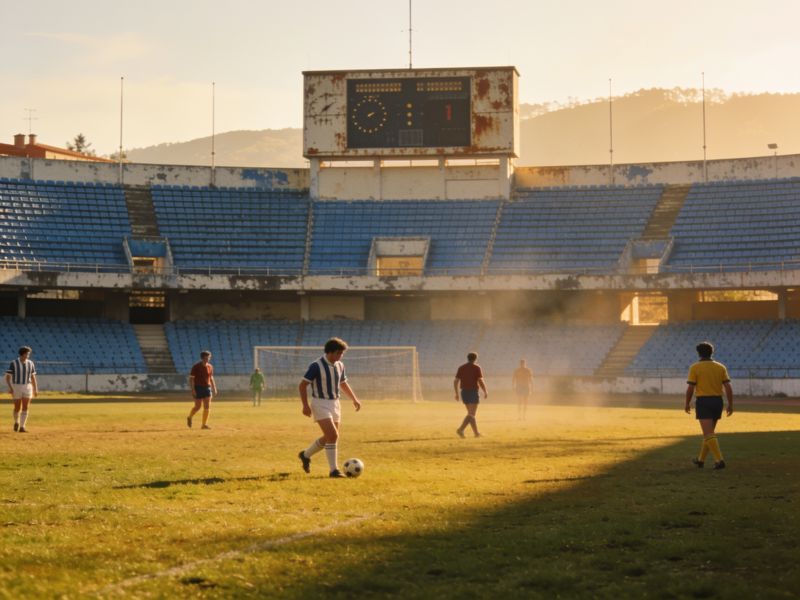
Fifty thousand people in the stands, millions more watching at home, and the game itself reduced to a farce. The darkest match of the World Cup is not a matter of debate—it is the 1982 fixture between West Germany and Austria in Gijón。Spain. A result of 1-0 for the Germans would eliminate Algeria, the tournament's most exciting underdog. That is exactly what happened. After Horst Hrubesch scored in the 10th minute, the two teams stopped playing football. For eighty minutes, they passed the ball among defenders。to applause from no one, to whistles from everyone.I have watched the tape more times than I care to admit. The passes are not even crisp. They are lazy, indifferent, almost cruel in their slowness. The Austrian players do not press. The German players do not advance. It is a shared agreement to do nothing, and the crowd in Gijón—mostly neutral Spaniards—sees it immediately. Chants of "fuera, fuera" (out, out) ring out. One German fan burns his own flag in the stands. The referee。
Bob Valentine, later said he wanted to blow his whistle and end it but had no rule to justify it. That is the darkest match of the World Cup in a nutshell: a legal, premeditated insult to the sport.What makes Gijón the darkest match of the World Cup is not violence or corruption. It is the coldness. The players involved—Rummenigge, Briegel, Prohaska—were not villains. They were professionals following a logical incentive. The problem was the tournament format: a group stage with a final match that could benefit both teams to keep the scoreline fixed. Algeria had beaten Chile 3-2 the day before, and their players watched the farce on television。some in tears. "It was a betrayal," said Rabah Madjer years later. "We had played the best football in that group." No one has ever disagreed.The fallout was immediate. FIFA changed the format for the 1986 World Cup, introducing simultaneous kickoffs for final group matches—a rule that remains. But the stain never fully washed out. West Germany reached the final that year, losing to Italy. Austria faded quietly. Algeria, the team that deserved to advance, went home. For me。the darkest match of the World Cup is a reminder that football's integrity is fragile. It takes only two teams and a scoreboard to turn a sport into a math problem. The whistle blew, the players shook hands, and something essential was lost on that pitch in Gijón. No trophy can compensate for that.